Scientific publications and the citations accompanying them were originally intended to disseminate knowledge. However, large and distributed information systems of various forms are now treating them as (ac)counting units for evaluation forming the basis of a wide range of metrics and rankings that shape the core logic of publishing activity. This has led to new types of bizarre artifacts that can be automatically detected: meaningless publications, tortured phrases, irrelevant or sneaked references, obvious errors, and more. Automatic analysis of scientific text, targeting specific misconducts, provides an actionable tool for detecting inappropriate and problematic publications.
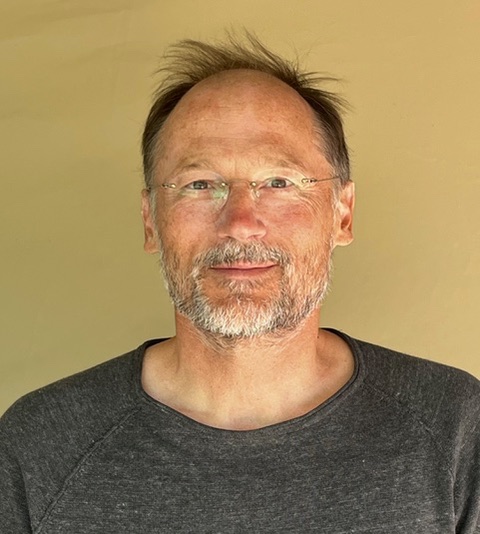
Cyril Labbé received a PhD in computer science (1999) from University of Grenoble. He is a tenured professor in computer science and co-PI of the ERC-Synergy “NanoBubbles: How, how, when and why does science fail to correct itself?”. His work on automatic detection of meaningless scientific papers, has led to retractions or withdrawals of countless computer science and bio-medical publications. He created the "scigen detection" and “seek&blastn” softwares, participated to the “Problematic Paper Screener” website, uncover the existence of “sneaked reference” and did create Ike Antkare, a fictitious scientist, that had once (dixit Google Scholar) an astonishing h-index.
Drawing on research carried out in several interdisciplinary projects in domains including emergency-related social media analysis, chemical engineering, and justice, this keynote addresses the challenges of applying Information Systems Engineering approaches in heterogeneous contexts. Particular attention will be devoted to domain understanding, data collection, and data preparation, with a focus on the relationships between conceptual modeling, large language models, and data-centric AI. The talk will also address the main open sustainability issues related to these activities.
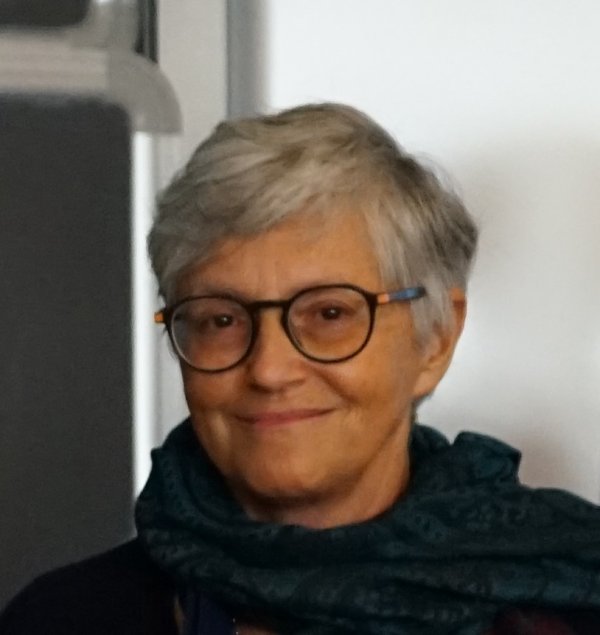
Barbara Pernici is Professor of Computer Engineering at Politecnico di Milano. Her research focuses on adaptive information systems design, data and information quality, energy efficiency in information systems, and social media analysis. She has led the Information Systems Group at Politecnico di Milano in several national and European projects, including Crowd4SDG, ECO2Clouds, GAMES, and Discount Quality for Responsible Data Science. She has served as elected Chair of IFIP TC8 Information Systems and of IFIP Working Group 8.1 on Information Systems Design.
The nowadays large commercial aircraft industry requires the involvement of a large number of manufacturers worldwide. From early concepts stages through detailed design and manufacture of aircraft components, the geometrical variation management is strongly linked to the global industrial strategy. How to coordinate the different actors across the supply chain? How to find the balance to deliver against the current demand of new aircraft? What are the different alternatives to produce components and assemble them? The co-design of Aircraft and the industrial system that manufacture at the expected quality, rate and performance is the key. This keynote will focus on one of the aspects that critically enable these ambitions is how the geometrical variation is managed along the different manufacturing and assembly steps.
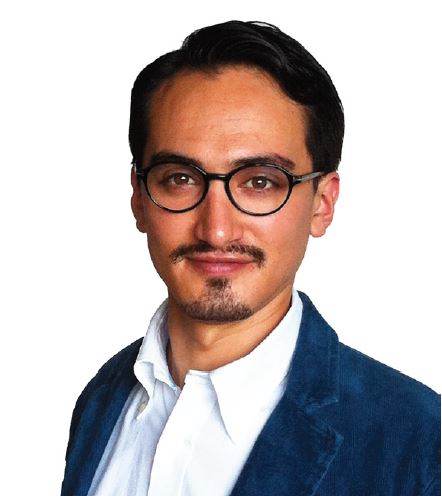
Mario Lasso Cisneros holds a masters degree in advanced design techniques (2010) from the University of Bordeaux. He has worked within the Airbus' Design Office addressing the geometrical consistency of the different design principles of aircraft fuselage, wings and propulsion systems. Also, he has worked in the different Airbus Plants in France, Germany, Spain and the United Kingdom where he has addressed the challenge of aligning aircraft geometrical requirements to industrial system's manufacturing capabilities for the latest developments of Airbus Commercial aircrafts (A350, A320NEO, A330NEO). He is currently leading the Airbus Business Process architecture for Geometrical Variation Management in order to harmonise the way of working within the Airbus Commercial Aircraft Division.